TL;DR: BlueScope warrants fencing made from Colorbond steel for up to 10 years against rusting through and against the paint flaking or peeling, but only where the fence is more than one kilometre from a marine environment. No manufacturer publishes a lifespan in years beyond that. How long your fence lasts comes down to how it was installed, what is sitting against it, and whether it gets hosed down at least every six months.
What the warranty tells you
The warranty is the only hard number the manufacturer puts on a Colorbond fence. BlueScope’s fencing warranty runs for up to 10 years from installation and covers two things: the steel corroding all the way through, and the paint flaking or peeling from normal weathering.
There’s a catch that matters on this coast. That warranty only applies to fences more than a kilometre from a marine environment, and Lysaght, one of the big makers of fencing from Colorbond steel, says in its fencing warranty that its fencing shouldn’t be used within a kilometre of the ocean at all. Plenty of streets in Avoca Beach, Copacabana, Terrigal, Wamberal and Umina Beach sit inside that line. If yours does, ask whoever quotes your fence which product they’re using and what warranty applies at your address, and get the answer in writing. If you live close to the water, our guide on whether Colorbond rusts near the beach covers what to watch for.
A warranty is the minimum a manufacturer will stand behind. Two fences made from the same steel can age very differently, and the difference usually comes down to the install and what the fence lives next to. Our Colorbond fencing page covers the range we install.
What a Colorbond fence won’t die from
Rot and termites, for a start. BlueScope says a Colorbond steel fence won’t rot and won’t be eaten by termites, which is how most timber fences on the Coast eventually go. It doesn’t burn either. In bushfire testing by the Bushfire CRC and CSIRO, sheet steel fencing performed best of the materials tested, which counts if your back fence faces bush. We’ve covered that research in Colorbond fencing and fire performance.
What shortens a Colorbond fence’s life?
Most early trouble starts at the bottom of the fence, or anywhere something sits against the steel and keeps it damp. These are the ones to watch:
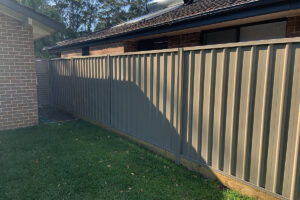
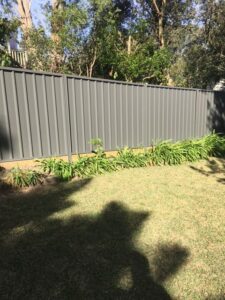
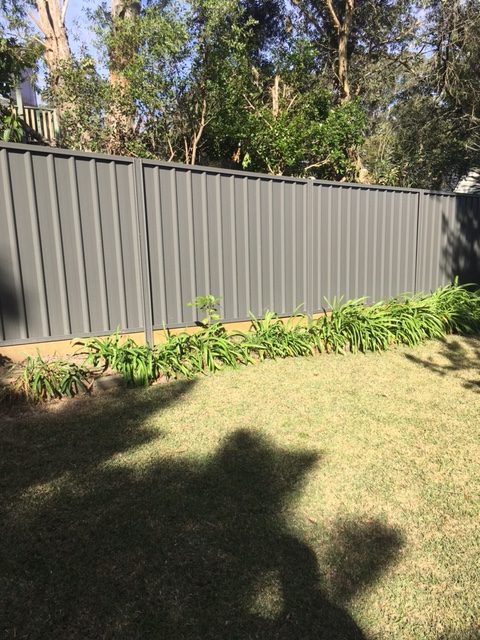
- Soil, mulch and garden beds. Lysaght’s installation guide says panels must be installed clear of the ground, with the bottom rail about 50 mm above finished ground level. Garden beds and turf that creep up the fence over a few years hold moisture and salt against the bottom rail day and night.
- Using the fence to hold back soil. The same guide says its fences are not to be used as a retaining wall. On a sloping block, the high side needs proper retaining before the fence goes up, or the soil ends up against the sheets.
- Concrete on the rails or sheets. Only the posts are made to sit in concrete. BlueScope says the posts have a different metallic coating under the paint for that job, and concrete shouldn’t touch the rails or infill sheets. Footings that bury the bottom rail cut its life short.
- Steel filings left on the paint. Cutting and drilling throw off fine steel debris called swarf. Left on the fence, it rusts and leaves orange spots. BlueScope and Lysaght both say to clean it off after installation.
- Pool water. Lysaght says its fencing made from Colorbond steel shouldn’t be used in the splash zone of saltwater or chlorine pools, and that if the fence does get splashed, you should hose it down before the water dries.
- Cheap screws. Lysaght’s warranty calls for fasteners rated Class 3 or better under AS 3566. A lower-grade screw rusts first and streaks the panel below it.
- Spots the rain never reaches. Behind a shed, under a deep overhang or behind a thick hedge, salt builds up because rain never rinses it off.
Most of that list is decided on installation day. When you’re comparing quotes, ask each installer how they handle footings, ground clearance and clean-up. A good answer is a specific one.
Looking after it: one hose, twice a year
BlueScope’s maintenance advice is short. Hose the fence down with clean, fresh water at least every six months, more often in coastal areas, and pay attention to the parts the rain doesn’t wash. If it needs a scrub, use a sponge, soft cloth or soft nylon brush, never a scourer or steel wool. Lysaght also suggests checking that drainage holes stay clear so water can run out.
Keep shrubs and creepers trimmed back off the panels while you’re at it. Our Colorbond maintenance guide has the full routine.
Common questions about Colorbond lifespan
Is the warranty the same for every Colorbond fence?
No. The figure above is BlueScope’s standard fencing warranty. Some fencing products made from Colorbond steel are advertised with up to 15 years, and every warranty comes with conditions about location and upkeep. Ask your installer which product is on your quote and for a copy of its warranty.
Can one damaged section be replaced without replacing the whole fence?
Usually, yes. Posts, rails and infill sheets are separate parts, so a rusted bottom rail or a dented panel can be swapped out. The catch is colour: new steel can look brighter next to panels that have been in the sun for years, so it’s worth seeing old and new side by side before you decide.
Want a second opinion on your fence?
If you’re planning a new fence, or wondering how much life is left in the one you’ve got, Jarrod can come out, look at the bottom rails, footings and whatever’s built up against them, and tell you straight. Call 0433 770 554 or book a free on-site quote.
Avoca Beach Fencing & Gates is fully licensed and insured. NSW contractor licence 314691C