TL;DR: It can. Salt air close to the surf is the toughest test a Colorbond fence faces, and BlueScope’s fencing warranty doesn’t cover fences within one kilometre of a marine environment. Close to the water, a Colorbond fence lasts when it’s kept clear of the ground, hosed down often and checked at the bottom rail. If you’re right on the beachfront, powder-coated aluminium is worth considering too.
Why salt is hard on a steel fence
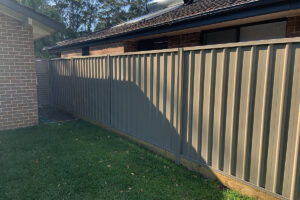
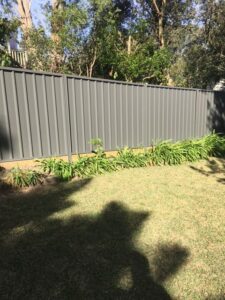
Colorbond is steel with a metallic coating and a baked-on paint finish over the top. Salt carried on the onshore breeze settles on the fence and holds moisture against it. On the faces the rain hits, it gets washed off. In the spots rain can’t reach, it builds up, and wherever the coating is broken, at a cut edge, a deep scratch or a screw hole, corrosion has somewhere to start.
That’s why rust near the coast rarely starts in the middle of a panel. It starts low down, in sheltered corners, or at the edges. It’s also why the way a Colorbond fence is installed matters more by the beach than it does inland.
The one-kilometre line
BlueScope’s warranty for fencing made from Colorbond steel covers corrosion and paint failure for up to 10 years, but only for fences more than one kilometre from a marine environment. Lysaght, which makes fencing from Colorbond steel, says in its installation guide that steel fences shouldn’t be installed within 1 km of marine environments, and its warranty says the same about the ocean.
On the Central Coast, that line runs through a lot of backyards. Large parts of Avoca Beach, Copacabana, Terrigal, Wamberal, Bateau Bay, The Entrance and Umina Beach sit within a kilometre of the surf.
Inside that line, the manufacturer won’t guarantee the steel, so how the fence is installed and looked after carries more weight. Before you sign a quote, ask which product the installer is using and what warranty, if any, applies at your address. Get the answer in writing.
Where to look for rust first
If your Colorbond fence is near the water, a walk along it every few months will catch most problems early. Check these spots:
- The bottom rail, especially where garden beds, mulch or lawn have built up against it.
- Behind sheds, water tanks and thick hedges, where rain never rinses the salt off.
- Cut edges, and around screw heads.
- Any section in the splash zone of a pool.
Bubbling paint, or orange staining that starts at an edge and spreads, is corrosion. Caught early, it’s often a single rail or sheet to replace rather than the whole run.
Orange spots on a new fence are usually swarf
If small orange dots show up on the rails or the face of the sheets within weeks of installation, it’s probably not the fence rusting. When steel is cut or drilled, it throws off fine filings called swarf. Left on the paint, they rust and leave spots that look alarming. BlueScope describes swarf as steel debris from cutting or drilling and says it should be cleaned up during installation.
Swarf spots sit on the surface, are scattered near where cuts were made, and don’t bubble the paint. Ask your installer to come back and clean them off properly. Don’t attack them with a scourer: BlueScope advises a sponge, soft cloth or soft nylon brush only, because abrasives scuff the paint.
Living close to the water: your options
Colorbond, installed and kept with the salt in mind
Keep the bottom rail about 50 mm clear of the ground, as Lysaght’s guide requires, keep garden beds off it, and use fasteners rated Class 3 or better. Then hose it down with fresh water more often than the six-monthly minimum BlueScope sets for coastal areas. Within a few hundred metres of the surf, monthly is a sensible habit. Go in knowing the manufacturer’s warranty may not apply at your address. Our guide to how long a Colorbond fence lasts on the Central Coast covers the install details that make the biggest difference.
Powder-coated aluminium
Aluminium doesn’t rust the way steel does, because rust is iron oxide and aluminium has no iron in it. Salt can still mark and dull the finish, so it needs the same hose-down, but there’s no steel underneath to corrode. Aluminium slat fencing gives a modern look with some airflow, and aluminium tubular fencing suits pool and front fences. We install both Colorbond and aluminium, so we can walk you through both on site.
Common questions
Does Brisbane Water or Tuggerah Lake count as a marine environment?
BlueScope’s fencing warranty page doesn’t define “marine environment”. Brisbane Water is tidal salt water, so if you’re in Woy Woy, Davistown, Saratoga or Green Point, treat it as marine until your supplier tells you otherwise in writing. Tuggerah Lake opens to the sea at The Entrance, so ask the same question there.
How do I work out if I’m within a kilometre?
Open a map app, drop a pin on your property and measure a straight line to the nearest beach or ocean shoreline. BlueScope measures its roofing and walling distances from the high-water mark, which is a fair way to measure for a fence too.
Will hosing it down make a difference?
Yes. BlueScope says regular washing with clean, fresh water prolongs the life of Colorbond steel, and near the ocean it recommends doing it more often than every six months. Our Colorbond maintenance guide walks through it.
Weighing up a fence near the water?
Jarrod can come out, look at how exposed your block is, and talk you through Colorbond and aluminium for your spot. Call 0433 770 554 or book a free on-site quote.
Avoca Beach Fencing & Gates is fully licensed and insured. NSW contractor licence 314691C.